
Why Parkinson’s Can Affect Your Sense of Time
How Parkinson’s Can Affect Your Sense of Time
Most people rarely think about their sense of time.
We estimate how long tasks will take, judge when to leave the house, follow conversations at a certain pace, and move through daily routines without giving it much thought.
For some people living with Parkinson’s, however, their perception of time can gradually change.
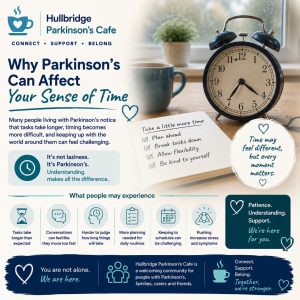
Tasks may seem to take longer than expected, routines may feel harder to manage, and keeping pace with the world around them can become increasingly challenging.
This is one of the lesser-known symptoms of Parkinson’s, but it can have a surprisingly large impact on everyday life.
 Parkinson’s affects more than movement
Although Parkinson’s is often associated with physical symptoms, it can also affect areas of the brain involved in attention, processing speed, planning, and timing.
These changes may influence how someone experiences and manages time throughout the day.
According to Parkinson’s UK, cognitive changes can affect concentration, planning and information processing in Parkinson’s.
Everyday tasks may take longer
Many people notice that activities they once completed quickly now require more time and effort.
This is not because they are being careless or slow.
Often it reflects the extra concentration required to perform tasks that previously felt automatic.
Things such as getting dressed, preparing meals, organising paperwork, or leaving the house may gradually require more planning and more time.
Keeping up with conversations can feel harder
Time perception can also affect communication.
Some people find conversations move faster than they can comfortably process.
By the time they have formed a response, the discussion may already have moved on.
This can sometimes lead to frustration or reduced confidence in social situations.
Rushing often makes things worse
One of the most common experiences reported by people living with Parkinson’s is that feeling rushed increases stress and makes symptoms more noticeable.
Pressure to move quickly, make fast decisions, or keep pace with others can sometimes create additional mental and physical strain.
You may also find these related articles helpful:
- Why Parkinson’s Can Make Everyday Decisions More Difficult
- Why Parkinson’s Can Affect Reading and Concentration
Planning becomes more important
Many people find that allowing extra time for activities reduces stress and helps maintain confidence.
Simple strategies may include:
- planning ahead
- avoiding unnecessary rushing
- breaking tasks into smaller steps
- using reminders and calendars
- allowing flexibility in schedules
- taking regular breaks
These adjustments can help create a more comfortable pace for everyday life.
Family and friends may not realise
Because changes in time perception are invisible, they are often misunderstood.
Others may assume someone is being forgetful, distracted, or unorganised when in reality Parkinson’s is affecting how information is processed.
A little extra patience and understanding can make a huge difference.
Everyone’s experience is different
Not everyone living with Parkinson’s experiences changes in the same way.
Some people may notice only occasional difficulties, while others find timing and pacing become a regular challenge.
Like many Parkinson’s symptoms, these experiences can also vary from day to day.
The hidden side of Parkinson’s
Changes in time perception are another reminder that Parkinson’s affects much more than movement alone.
You may also find these related articles helpful:
- The Parkinson’s Iceberg
- Living With Parkinson’s: What People Don’t Always See
- When Parkinson’s Makes Multitasking More Difficult
Symptoms such as fatigue, concentration difficulties, communication changes, reduced automatic movements, and altered time perception may not always be visible to others, but they can still shape daily life in meaningful ways.
Greater awareness helps build understanding, patience, and support for people living with Parkinson’s.
⸻
Hullbridge Parkinson’s Cafe provides a calm and welcoming community space for people living with Parkinson’s, families, carers, and friends to connect and feel understood.