
The Parkinson’s Iceberg
The Parkinson’s Iceberg: It’s Not Just What You Can See
Parkinson’s is often thought of as a condition of visible movement symptoms such as tremor, stiffness and slowness. These are usually the signs that people notice first.
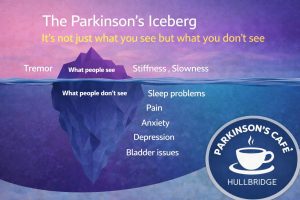
But Parkinson’s is often described as an iceberg because the visible symptoms are only part of the picture. Beneath the surface, many people live with a wide range of hidden symptoms that can affect daily life just as much, and sometimes more, than the symptoms others can see.
 What People Often See
When most people think about Parkinson’s, they think about the movement symptoms that are easier to recognise. These can include:
- Tremor
- Slowness of movement
- Stiffness or rigidity
- Changes in balance or walking
These symptoms are important, but they do not tell the whole story.
What People Often Do Not See
Many of the symptoms of Parkinson’s are not obvious to other people. These are often called non-motor symptoms or invisible symptoms.
They can include:
- Sleep problems and fatigue
- Constipation and bladder issues
- Pain
- Anxiety and depression
- Apathy or lack of motivation
- Changes in thinking or memory
- Speech or swallowing difficulties
- Hallucinations in some cases
These hidden symptoms can affect confidence, independence and quality of life, even when a person may look well on the outside.
Why the Iceberg Comparison Matters
The idea of the Parkinson’s iceberg helps explain why the condition can be misunderstood.
Someone may appear to be managing well because others only notice a tremor or slower movement. What they may not see is the poor sleep, the anxiety, the bladder urgency, the pain, the fatigue or the emotional effort involved in getting through the day.
This is why Parkinson’s is much more than a movement condition.
Invisible Symptoms Can Be Just as Difficult
For many people, the hidden symptoms of Parkinson’s are the hardest part to live with. They may be less visible, but they can be deeply disruptive.
Fatigue can make even simple tasks feel overwhelming. Anxiety can affect confidence. Sleep problems can impact both the person with Parkinson’s and those around them. Changes in mood, thinking or motivation can also be difficult to explain to others.
Because these symptoms are not always obvious, they may be overlooked or misunderstood.
Why Support and Understanding Matter
Recognising the hidden side of Parkinson’s helps build understanding, patience and support.
It reminds families, carers, friends and the wider community that what is visible on the outside may only be a small part of what someone is living with.
At Hullbridge Parkinson’s Cafe, we understand that support is not only about what can be seen. It is also about creating a space where people feel understood, listened to and less alone.
Talking About the Hidden Side of Parkinson’s
One of the most helpful things people can do is talk openly about the less visible symptoms of Parkinson’s.
This can make it easier to ask for help, explain changes to others, and access the right support. It can also help carers and family members better understand what their loved one may be experiencing.
If symptoms are affecting day-to-day life, speaking to a GP, Parkinson’s nurse or specialist can be an important next step.
Further Support and Information
You can find more help and information here:
Final Thoughts
The Parkinson’s iceberg is a powerful way of understanding the condition. What people see on the surface is only part of the experience. Beneath that surface are many hidden symptoms that can affect everyday life in significant ways.
Greater awareness of the invisible side of Parkinson’s can lead to more compassion, better conversations and stronger support for those living with the condition.