
Understanding Parkinson’s Disease in the UK
Parkinson’s Disease in the UK: A Practical Guide to Symptoms, Care and Support
Excerpt: Parkinson’s disease affects tens of thousands of people across the UK and is one of the fastest‑growing neurological conditions worldwide. This guide explains what Parkinson’s is, how it is diagnosed and treated on the NHS, and where to find practical and emotional support for living well with the condition.
 What is Parkinson’s disease?
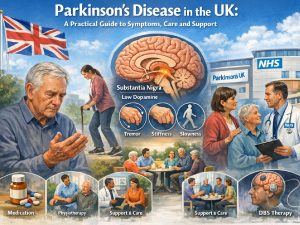
Parkinson’s disease is a progressive neurological condition that affects how the brain controls movement. It is mainly linked to the loss of nerve cells in a part of the brain called the substantia nigra, which reduces levels of the chemical messenger dopamine. Lower dopamine levels make it harder for the brain to coordinate smooth, controlled movements, leading to the symptoms many people recognise: tremor, stiffness and slowness.
Although Parkinson’s is often thought of as a condition that only affects older people, it can appear earlier in life too. Most people are diagnosed over the age of 60, but “young onset” Parkinson’s can occur in people in their 30s, 40s or 50s. The condition is long‑term and currently has no cure, but there are many treatments and strategies that can help people manage symptoms and maintain quality of life.
Parkinson’s in the UK: how common is it?
In the UK, Parkinson’s is one of the most common neurodegenerative conditions. Estimates suggest that well over 100,000 people are living with a diagnosis, and because the population is ageing, that number is expected to rise significantly over the coming decades. Research looking at global trends also predicts that the number of people with Parkinson’s worldwide will more than double by 2050, with population ageing being a major driver.
To support planning of services, organisations such as
Parkinson’s UK
provide detailed dashboards and reports on prevalence and incidence across England, Scotland, Wales and Northern Ireland. These data help the NHS, local authorities and charities understand where need is greatest and how to allocate resources for diagnosis, treatment and long‑term support.
Key symptoms to look out for
Parkinson’s affects everyone differently, but there are some core motor (movement‑related) symptoms that doctors look for when making a diagnosis. There are also many non‑motor symptoms that can have just as much impact on day‑to‑day life.
Motor symptoms
- Tremor: A shaking, often in the hand or arm, that is more noticeable when the limb is at rest.
- Slowness of movement (bradykinesia): Taking longer to start or complete movements, such as getting up from a chair or walking.
- Muscle stiffness (rigidity): A feeling of tightness or resistance in the muscles, which can make movement uncomfortable or tiring.
- Balance and posture problems: Stooped posture, reduced arm swing and a higher risk of falls.
Non‑motor symptoms
- Sleep problems: Insomnia, restless sleep or acting out dreams.
- Mood changes: Anxiety, depression or apathy.
- Cognitive changes: Slower thinking, difficulties with planning or concentration.
- Other symptoms: Constipation, urinary issues, pain, loss of sense of smell and fatigue.
Not everyone will experience all of these symptoms, and they may change over time. If you or someone you know in the UK is noticing a combination of tremor, slowness and stiffness, it is important to speak to a GP for assessment.
Diagnosis and treatment on the NHS
In the UK, the usual first step is to visit your GP, who can rule out other causes and, if appropriate, refer you to a neurologist or a specialist in movement disorders. Diagnosis is based mainly on medical history, symptoms and a physical examination. There is no single blood test or scan that can confirm Parkinson’s, but in some cases brain imaging may be used to support the diagnosis or exclude other conditions.
Once diagnosed, treatment is tailored to the individual. Common approaches include:
- Medication: Drugs such as levodopa and dopamine agonists are used to boost or mimic dopamine in the brain, helping to improve movement.
- Therapies: Physiotherapy, occupational therapy and speech and language therapy can support mobility, daily activities and communication.
- Advanced treatments: For some people with more advanced symptoms, options such as deep brain stimulation (DBS) may be considered by specialist teams.
The NHS provides most Parkinson’s care free at the point of use, but waiting times and access to specialist services can vary by region. Keeping in regular contact with your Parkinson’s nurse or specialist team can help ensure your treatment is reviewed and adjusted as your needs change.
Living well with Parkinson’s in the UK
A diagnosis of Parkinson’s can feel overwhelming, but many people continue to work, care for family and enjoy hobbies for years after diagnosis. Building a strong support network and making small, sustainable lifestyle changes can make a real difference.
- Staying active: Regular exercise—such as walking, swimming, tai chi or dance—can help with balance, strength and mood.
- Healthy eating: A balanced diet with plenty of fibre and fluids can support energy levels and help manage constipation.
- Mental wellbeing: Talking therapies, peer support groups and mindfulness can help people cope with anxiety, low mood and uncertainty.
- Planning ahead: Discussing work, driving, finances and future care early on can reduce stress later.
Charities and community organisations across the UK run local groups, exercise classes and information sessions specifically for people with Parkinson’s and their families. These can be a lifeline for sharing experiences and practical tips.
Where to find reliable information and support
When searching online, it is important to use trustworthy sources. In the UK, good starting points include:
- NHS:
The official NHS pages on Parkinson’s provide clear, evidence‑based information on symptoms, diagnosis and treatment:
NHS – Parkinson’s disease. - Parkinson’s UK:
A leading charity offering helplines, local groups, research updates and practical resources for people living with Parkinson’s and their carers:
Parkinson’s UK website. - Local services:
Your GP surgery, local council and integrated care board (ICB) websites often list nearby support groups, social care options and carers’ services.
If you are worried about symptoms or how to manage an existing diagnosis, speak to your GP, Parkinson’s nurse or specialist team. Online information is a useful starting point, but it should never replace personalised medical advice.