
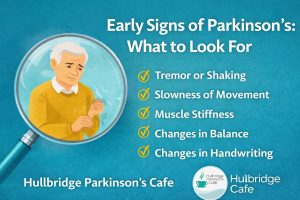
Early Signs of Parkinson’s: What to Look For
 What is Parkinson’s Disease?
Parkinson’s is a progressive neurological condition that affects movement. It is caused by a reduction in dopamine, a chemical in the brain that helps control movement and coordination.
You can read more in our guide to Parkinson’s support in Essex.
Common Early Signs of Parkinson’s
Tremor (Shaking)
A slight tremor, often starting in one hand or finger, is one of the most recognised early signs. It may occur when the body is at rest and can be subtle at first.
Slowness of Movement (Bradykinesia)
Everyday tasks may take longer than usual. People may notice slower walking, reduced arm swing or difficulty starting movements.
Muscle Stiffness
Stiffness in the limbs or body can make movement uncomfortable and limit range of motion. It may also cause muscle aches or tension.
Changes in Balance and Posture
Some people experience changes in posture, such as stooping slightly forward, or may feel less steady when standing or walking.
Reduced Facial Expression
A person’s face may appear less expressive, sometimes described as a “masked” expression.
Changes in Handwriting
Handwriting may become smaller or more cramped over time, a condition known as micrographia.
Other Early Symptoms
In addition to movement-related changes, there are other early signs that may appear:
- Loss of sense of smell
- Sleep disturbances
- Fatigue
- Mood changes such as anxiety or low mood
- Constipation
These symptoms can have other causes, but when combined with movement changes, they may be linked to Parkinson’s.
When to Seek Medical Advice
If you or someone you know is experiencing several of these symptoms, it is important to speak to a GP. Early assessment can help identify possible causes and guide next steps.
Further information is available from the NHS Parkinson’s disease page.
Support and Community
Being diagnosed with Parkinson’s or noticing symptoms can feel overwhelming. Having access to a supportive community can make a significant difference.
Hullbridge Parkinson’s Cafe provides a welcoming space where people living with Parkinson’s, carers and families can meet, share experiences and support one another.
Learn more about our community on the About Us page or get in touch.
Final Thoughts
The early signs of Parkinson’s can be subtle, but recognising them is an important first step. Understanding what to look for can help people seek advice, access support and feel more informed about their health.
If you are unsure about any symptoms, speaking to a healthcare professional is always recommended.