
Parkinson’s and Low Blood Pressure: Why Standing Up Can Make You Feel Dizzy
Parkinson’s and Low Blood Pressure: Why Standing Up Can Make You Feel Dizzy
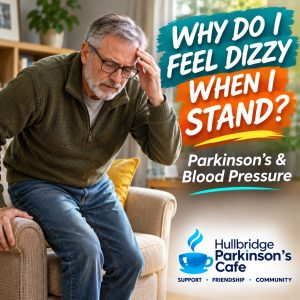
Imagine sitting comfortably in your favourite chair.
You’ve been watching television, reading or enjoying a cup of tea.
Then you decide to stand up.
Almost immediately, something feels wrong.
You become light-headed.
Your vision may briefly become blurred or darker.
Your legs feel weak.
Perhaps you need to grab the arm of the chair or sit back down.
After a short while, the sensation passes.
It’s tempting to dismiss the experience as simply getting up too quickly.
But for some people living with Parkinson’s, these episodes can be related to a drop in blood pressure when changing position.
This is known as orthostatic hypotension, sometimes called postural hypotension.
And recognising it matters because it can increase the risk of falls and affect someone’s confidence in everyday activities.
 What Is Orthostatic Hypotension?
Blood pressure is the force of blood pushing against the walls of the arteries as the heart pumps blood around the body.
When we stand up, gravity causes some blood to move towards our legs and abdomen.
Normally, the body responds automatically.
Blood vessels narrow and the heart adjusts its activity to help maintain blood flow to the brain.
Most of us barely notice this process.
But if the body’s response is inadequate, blood pressure may fall when we stand.
This can temporarily reduce blood flow to the brain and cause dizziness, light-headedness or fainting.
Orthostatic hypotension is commonly defined as a sustained fall in systolic blood pressure of at least 20 mmHg, or diastolic pressure of at least 10 mmHg, within three minutes of standing.
However, assessment may need to consider symptoms, medication, the person’s usual blood pressure and whether a delayed drop occurs.
Not everyone with orthostatic hypotension experiences obvious symptoms.
Why Can Parkinson’s Affect Blood Pressure?
Parkinson’s is best known for symptoms affecting movement.
Tremor.
Stiffness.
Slowness.
Changes in walking and balance.
But Parkinson’s can also affect the autonomic nervous system.
This is the part of the nervous system responsible for many functions that happen automatically.
It helps regulate blood pressure, heart rate, digestion, sweating and bladder function.
In some people with Parkinson’s, the nerves involved in maintaining blood pressure do not respond normally when the person stands.
This is sometimes described as neurogenic orthostatic hypotension.
The blood vessels may not constrict sufficiently, and the heart-rate response may be inadequate.
As a result, blood pressure can fall.
However, not every episode of low blood pressure in someone with Parkinson’s is caused directly by the condition.
Dehydration, other illnesses and medication effects can also contribute.
What Does Low Blood Pressure Feel Like?
The experience varies from person to person.
Common symptoms can include:
- Dizziness or light-headedness after standing.
- Blurred, dimmed or tunnel vision.
- Feeling weak or unsteady.
- Unusual tiredness or fatigue.
- Difficulty concentrating while upright.
- Discomfort in the neck or shoulders.
- Feeling as though you may faint.
- Actual fainting or collapse.
Symptoms may improve when the person sits or lies down.
Some people experience only mild episodes.
Others may have frequent symptoms that interfere with daily activities.
And some people have measurable drops in blood pressure without noticing anything unusual.
Why It Can Be Mistaken for a Balance Problem
Balance difficulties are common in Parkinson’s, particularly as the condition progresses.
Someone may already be cautious when standing or walking.
If they begin feeling dizzy, it’s easy to assume that their Parkinson’s-related balance has simply become worse.
But dizziness caused by falling blood pressure is different from the movement and postural-control problems associated with Parkinson’s.
The two can also occur together.
Imagine someone who already has difficulty maintaining balance.
They stand up, their blood pressure drops, and they suddenly become light-headed.
That combination can increase the risk of falling.
This is why new or worsening dizziness should not automatically be dismissed as another unavoidable Parkinson’s symptom.
Identifying the cause may reveal something that can be treated or managed.
When Is Dizziness More Likely to Happen?
Orthostatic hypotension can be influenced by several everyday circumstances.
Getting Out of Bed
Some people experience symptoms when standing for the first time in the morning.
Moving directly from lying down to standing can trigger a noticeable drop in blood pressure.
After Eating
Blood pressure can sometimes fall after meals, a phenomenon known as postprandial hypotension.
This happens because blood flow increases around the digestive system and the body’s normal compensatory responses may be insufficient.
Large meals, particularly those rich in carbohydrates, can contribute in susceptible individuals.
Hot Weather and Hot Showers
Heat causes blood vessels to widen.
For someone who already has difficulty regulating blood pressure, hot environments may make symptoms worse.
Standing Still for Long Periods
Standing in queues or remaining upright without moving can allow blood to pool in the lower body.
This may contribute to dizziness or faintness.
Dehydration
Not drinking enough fluid can reduce circulating blood volume and worsen low blood pressure.
Illnesses involving vomiting, diarrhoea or fever can also contribute.
Can Parkinson’s Medication Contribute?
Yes. Some medications used to manage Parkinson’s can contribute to low blood pressure in certain people.
These may include levodopa and dopamine agonists.
Other medicines, including some treatments for high blood pressure, depression or urinary symptoms, may also affect blood pressure.
However, medication effects vary considerably.
It is important not to assume that a particular medicine is responsible without a proper review.
Never stop or change Parkinson’s medication independently because of dizziness.
Sudden changes to dopaminergic treatment can cause significant problems.
If dizziness appears after a medication adjustment, or seems related to dose timing, discuss it with the prescribing clinician or Parkinson’s specialist nurse.
How Is Orthostatic Hypotension Diagnosed?
A healthcare professional may measure blood pressure and heart rate while the person is lying down and then after standing.
Measurements are commonly taken after a period of lying down and again during the first three minutes of standing.
Depending on the circumstances, further monitoring or specialist testing may be needed.
The clinician may also review:
- When symptoms occur.
- Whether the person has fainted or fallen.
- Current medications and recent changes.
- Fluid intake and possible dehydration.
- Other medical conditions.
- Whether symptoms occur after meals.
- Blood pressure readings at different times of day.
Some people with Parkinson’s who experience low blood pressure while standing may also have high blood pressure when lying flat.
This is known as supine hypertension.
It can complicate treatment, which is one reason management should be tailored to the individual.
What Can Help Reduce Dizziness?
There are practical strategies that may help some people, although the right approach depends on the cause and the person’s overall health.
1. Change Position Gradually
Rather than jumping straight out of bed, sit on the edge for a short while before standing.
Allow time to assess how you feel.
When getting up from a chair, use appropriate support and avoid rushing.
2. Sit Down if You Feel Faint
If dizziness begins, stop what you’re doing and sit or lie down somewhere safe.
Do not try to push through severe light-headedness or continue walking while feeling faint.
3. Review Fluid Intake
Adequate hydration may help, particularly when dehydration contributes to symptoms.
However, some people need fluid restrictions because of heart, kidney or other medical conditions.
Ask your healthcare professional what fluid intake is appropriate for you.
4. Discuss Meals and Symptoms
If dizziness frequently occurs after eating, mention this to your healthcare team.
They may recommend adjustments to meal size or composition, depending on your individual circumstances.
5. Avoid Excessive Heat
Very hot showers, baths or environments can worsen symptoms in susceptible people.
Keeping the environment comfortably cool may help.
6. Ask About Compression Garments
Some people benefit from abdominal binders or appropriate compression garments that reduce blood pooling.
These are not suitable for everyone, and the type and fit matter.
Discuss them with a clinician before use.
7. Review Medication
A clinician may identify medicines that contribute to low blood pressure or consider treatment adjustments.
In some cases, specific medication may be prescribed to manage symptomatic orthostatic hypotension.
These treatments require monitoring, particularly because of the risk of high blood pressure when lying down.
Should You Increase Salt Intake?
You may encounter advice suggesting that people with low blood pressure should consume more salt.
Increasing salt intake can be part of a treatment plan for some people with orthostatic hypotension.
But it is not appropriate for everyone.
People with high blood pressure, heart failure, kidney disease or certain other conditions may be harmed by increasing salt intake.
It is particularly important to consider the possibility of supine hypertension.
Do not substantially increase salt intake without discussing it with your healthcare professional.
What About Falls?
Falls are a significant concern for some people living with Parkinson’s.
Movement difficulties, freezing, changes in posture and reduced balance can all contribute.
Orthostatic hypotension may add another risk.
Someone who feels faint when standing may fall before they have time to sit down.
Repeated episodes can also make people anxious about moving around independently.
That can lead to avoiding activities, even when suitable assessment and treatment might improve the situation.
If dizziness is causing falls or near-falls, it deserves prompt medical attention.
A healthcare professional may consider blood pressure management alongside physiotherapy, mobility aids and other falls-prevention measures.
When Should You Seek Medical Help?
Speak to your GP or Parkinson’s specialist team if you experience recurrent dizziness when standing, unexplained weakness, near-fainting or falls.
Seek urgent medical assessment if you faint, sustain an injury or develop a sudden significant deterioration.
Call 999 if dizziness or collapse is accompanied by symptoms such as chest pain, severe breathlessness, signs of a stroke, or if the person is unresponsive or not recovering normally.
Not every episode of dizziness is caused by low blood pressure.
Other conditions, including heart rhythm problems, inner-ear disorders and neurological emergencies, may require investigation.
A Simple Symptom Diary Can Be Useful
If dizziness happens repeatedly, keeping a brief record may help your healthcare team identify patterns.
For example, note:
- The time of the episode.
- What you were doing immediately beforehand.
- Whether you had just stood up.
- Whether you had recently eaten.
- When you last took your medication.
- How long the symptoms lasted.
- Whether you needed to sit or lie down.
If your clinician has recommended home blood pressure monitoring, record readings according to their instructions.
Do not deliberately provoke severe dizziness or stand unsupported to obtain measurements.
The objective is to provide useful information safely.
Why Awareness Matters
Someone living with Parkinson’s may already be managing numerous changes.
They may experience stiffness, slower movement, fatigue or difficulties with balance.
When dizziness appears, it can be tempting to assume that it’s simply another part of the condition.
But that assumption can overlook a potentially manageable problem.
Understanding orthostatic hypotension can help people recognise symptoms, seek appropriate assessment and reduce avoidable risks.
It can also help family members understand why someone may suddenly need to sit down after standing.
They’re not necessarily being cautious without reason.
They may be experiencing a genuine physiological change.
Don’t Automatically Blame Parkinson’s
One of the most important lessons in managing a long-term condition is that not every new symptom should automatically be attributed to the original diagnosis.
Parkinson’s can affect blood pressure regulation.
But dizziness can have several causes.
Some are related to medication.
Some involve dehydration or other illnesses.
And some require investigations unrelated to Parkinson’s.
That is why asking questions matters.
What is causing the dizziness?
Does it happen when standing?
Could medication be contributing?
Is there an underlying problem that can be treated?
What changes might reduce the risk of falling?
These are questions worth discussing with a healthcare professional.
Because feeling dizzy when you stand up isn’t something you should simply have to accept without understanding why.
Further Information
- Parkinson’s UK — information about Parkinson’s symptoms, blood pressure changes and treatment.
- NHS — Low Blood Pressure — information about symptoms, causes and when to seek help.
Join Us at Hullbridge Parkinson’s Cafe
Hullbridge Parkinson’s Cafe provides a friendly, informal meeting place for people living with Parkinson’s, their partners, families and carers.
We meet at Hullbridge Free Church, 47–48 Lower Road, Hullbridge, Essex SS5 6DF, on the first and third Tuesday of every month, from 11:00am to 1:00pm.
Our next meeting is Tuesday 17 November 2026.
No booking required. New faces are always welcome.
Find out more at parkinsonscafe.co.uk.
This article is for general information and does not replace individual medical advice. Seek guidance from your GP, Parkinson’s specialist nurse or another qualified healthcare professional if you experience dizziness, fainting or falls.