
Freezing in Parkinson’s
Freezing in Parkinson’s: What It Is and How to Manage It
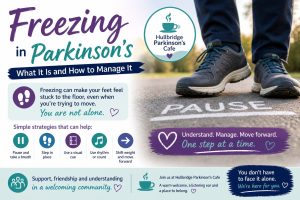
Freezing is one of the more frustrating symptoms of Parkinson’s. It can feel as though your feet are suddenly “stuck to the floor,” even when you are trying to move.
These episodes can happen without warning and can affect confidence, balance and day-to-day movement.
Understanding why freezing happens and what can help manage it is an important part of living with Parkinson’s.
 What Is Freezing?
Freezing is a temporary inability to move, most often affecting walking.
People may feel as though their feet will not lift or step forward, even though they are trying to move.
It can last a few seconds or longer and may happen occasionally or more frequently over time.
When Freezing Is Most Likely to Happen
Freezing often happens in specific situations, including:
- Starting to walk
- Turning or changing direction
- Walking through doorways or narrow spaces
- Approaching obstacles
- Feeling rushed or anxious
- When medication is wearing off
Recognising these triggers can help people prepare and respond more effectively.
Why Freezing Happens
Freezing is linked to how Parkinson’s affects movement signals in the brain.
It can also be influenced by factors such as stress, fatigue, attention, and timing of medication.
Because it is not always predictable, it can be one of the more challenging symptoms to manage.
Practical Ways to Manage Freezing
There are several techniques that may help during a freezing episode:
- Pause and take a breath rather than forcing movement
- Try stepping in place before moving forward
- Use a visual cue, such as stepping over an imaginary line
- Count steps out loud or use a rhythm
- Shift weight from one foot to the other
- Avoid rushing where possible
These techniques may not work every time, but many people find them helpful.
Confidence and Safety
Freezing can increase the risk of losing balance or falling, especially if it happens suddenly.
Taking time, staying calm and using simple strategies can help improve confidence when moving around.
If freezing is frequent, it is important to look at ways to reduce risk at home and when out and about.
The Role of Exercise and Support
Movement-based activities can help improve coordination, balance and confidence.
At Hullbridge Parkinson’s Cafe, Exercise for Parkinson’s (EFP) sessions focus on gentle, controlled movement and awareness, which may help support mobility.
Being in a supportive environment can also help people feel more confident trying different movement strategies.
When to Seek Advice
If freezing is becoming more frequent, affecting walking, or increasing the risk of falls, it is important to speak to a healthcare professional.
A GP, Parkinson’s nurse or physiotherapist may be able to review medication, suggest techniques, or recommend additional support.
Helpful Links
Final Thoughts
Freezing can be frustrating and sometimes worrying, but there are ways to manage it.
Understanding triggers, using simple techniques and having the right support can help improve confidence and movement in everyday life.